 en
en Tiếng Việt
 日本語
日本語 简体中文
简体中文 한국어
한국어
On entering secondary school, children begin a period of rapid physical development and important psychological and physiological changes. At this stage, parents and schools need to pay attention to building a complete nutrition regime in daily meals as well as in boarding meals at school, to help children develop their brains and grow taller. This in turn improves children's learning performance and eases the pressures they face in class and in daily life.
Refer to the nutrition regime for secondary school students in the article below to build scientific menus.

A balanced nutrition regime for secondary school students must balance the nutrient groups
Further reading:
- What is industrial catering? Menus and 2025 price quotes
- STAVI industrial catering supplier [NO. 1 IN HANOI]
- STAVI - The leading school catering supplier in Hanoi
The growth of secondary school children
Physical development
- Rapid growth in height and weight: Children enter puberty between the ages of 11 and 15, with strong physical development, especially in height. Girls usually develop about 1–2 years earlier than boys.
- Changes in body shape: The body begins to show clear sexual differentiation, such as a deeper voice in boys, breast development in girls, and the appearance of body hair and acne.
- Development of the reproductive organs: On entering puberty, the reproductive organs begin to develop markedly and reproductive function starts to form.
- Higher energy and nutritional needs: Because of strong physical growth, children need a balanced nutrition regime with nutrient-rich dishes and larger portions to meet the demands of all-round development.
Intellectual development
- Abstract and logical thinking: Children begin to develop critical thinking and can view and analyse problems from many angles, no longer thinking as simply as they did in primary school.
- Reasoning and problem-solving: Secondary school students can ask questions, look for causes, reach conclusions on their own and offer personal opinions. That is why, at this age, children often react when parents and teachers give them feedback.
- Independent learning: Children begin to form proactive study habits, learning to plan their studies, look for information and teach themselves through many different channels. At this point, parents no longer need to follow their child's studies as closely as in primary school.
- Imagination and creativity: At this age, many children clearly show their creative ability and rich imagination, especially in the arts, literature, technology and so on.
Common nutrition-related conditions in secondary school children
Nutrition plays a key role in the development of adolescents. If adequate and balanced nutrition is not ensured during this period, children not only fail to achieve the rapid growth appropriate to their age but are also prone to conditions such as:
Overweight and obesity
Overweight and obesity are common among secondary school students today, mainly due to an energy-surplus diet (rich in fat, sugar and fast food) combined with a lack of exercise. Obese children often feel insecure about their appearance and are reluctant to interact with friends and those around them, which affects their psychology and studies. In the long term, obesity increases the risk of chronic diseases such as diabetes, cardiovascular disease and metabolic disorders in adulthood.
Malnutrition (stunting, underweight)
In contrast to obesity, even today there are still children who suffer from malnutrition due to an inadequate diet, prolonged poor appetite or difficult living conditions. As a result, the child's body grows slowly or stops growing, leaving them shorter than their peers. Malnourished children tire easily, develop intellectually more slowly, achieve poorer academic results and fall ill easily because of weak resistance.

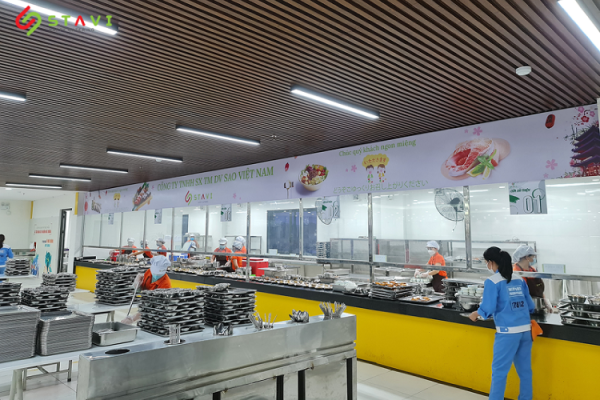
A fully nutritious meal for secondary school students from the STAVI kitchen
Micronutrient deficiencies
Secondary school children are at risk of deficiencies in important micronutrients such as iron, zinc, calcium, and vitamins A and D if their diet is unbalanced, which negatively affects their health and growth rate. Iron deficiency causes anaemia and fatigue and affects intellectual development. Calcium and vitamin D deficiency slows height growth and can lead to rickets. Zinc deficiency causes poor appetite and weakened immunity, while vitamin A deficiency affects eyesight and resistance to disease.
To prevent nutritional conditions, secondary school children need to eat a nutritionally complete diet with portions appropriate to their age. Meals should balance the 4 nutrient groups (carbohydrates, protein, fats, and vitamins and minerals), add green vegetables and fruit, and limit fast food and soft drinks. In addition, children need regular exercise, enough sleep and a relaxed state of mind in order to develop fully.
Eating disorders (poor appetite, emotional eating)
At this age, children are easily influenced by external factors, their emotions are easily swayed and they face academic pressure, leading to eating disorders such as poor appetite, skipping meals or uncontrolled eating. These disorders are not only harmful nutritionally but also negatively affect mental and physical health.
Intestinal conditions
Because their eating is hard to control, children who are hooked on fast food, fatty foods and sugary fizzy drinks are prone to digestive disorders and intestinal conditions such as diarrhoea and constipation. This makes children uncomfortable, affects nutrient absorption and reduces their quality of daily life. A scientific menu therefore helps children limit intestinal problems and absorb nutrients better.
What nutrients should secondary school children add to their menu?
The nutrition regime for secondary school students must meet the standard calorie intake to ensure growth and development and to sustain daily study and play.
Children at this age need 3 full main meals plus supplementary meals during the day with milk, bread and fruit. Meals should include a variety of foods containing the basic nutrient groups: carbohydrates, protein, fats, and vitamins and minerals. Specifically:
Protein
Protein plays an important role in building muscle, tissue and cells. Especially during puberty, children need plenty of protein to build strength, grow taller and boost immunity. Protein is found in foods such as lean meat, beef, fish, eggs, milk, cheese, tofu, soybeans and other legumes. Animal and plant protein should be combined to balance nutrition and support effective absorption.
Children aged 11-15 need at least 34g of protein per day, but parents can increase this to 45-65g depending on the child's dietary needs, physical condition and level of activity at any given time. In the nutrition regime for adolescents, the share of energy provided by protein should account for about 20% of total daily energy intake. Of this total protein, animal protein should make up 35% or more.
Healthy fats
Fat is an essential source of energy and helps absorb fat-soluble vitamins such as A, D, E and K. Fat also supports the development of the nervous system and brain, helping to improve learning performance. Children should get fat from healthy sources such as olive oil, canola oil, avocado, salmon, mackerel, walnuts and almonds. At the same time, a moderate amount of animal fat should be included so that the body functions at its best.
Meanwhile, parents need to limit the saturated fat found in fast food and deep-fried, oily dishes when planning their child's daily meals. For meals at school, chefs and nutrition staff also need to keep this in mind so that children have a scientific menu.
According to the recommendations of the National Institute of Nutrition, adolescents need 30 – 40g of fat per day to meet the demands of physical development and daily activity. The share of energy provided by fat should be about 20 – 30% of total dietary energy, enough to ensure absorption of fat-soluble vitamins. Of the total fat, lipids from animal sources should account for about 30 – 50%, in order to supply sufficient essential fatty acids. However, note that saturated fatty acids should not exceed 11% of total dietary energy, to limit the risk of blood lipid disorders and cardiovascular problems in the future.
.jpg "The nutrition regime of secondary school students needs many nutrient groups")
.webp "The nutrition regime of secondary school students needs many nutrient groups")
The nutrition regime of secondary school students needs many nutrient groups
Carbohydrates
Starch is the body's main source of energy, helping children sustain their studies, physical activity and brain development. However, priority should be given to good carbohydrates such as brown rice, sweet potato, oats and whole grains rather than white rice, white bread or sweets. Good carbohydrates keep children full for longer, stabilise blood sugar and reduce the risk of obesity and early-onset diabetes.
Vitamins and minerals
Vitamins and minerals are micronutrients that are needed only in small amounts but are absolutely essential. Calcium and vitamin D support bone development and height growth; iron prevents anaemia; zinc boosts immunity and stimulates appetite; vitamins A, C and B support eyesight, wound healing, resistance to disease and nervous system function. Good sources include milk, eggs, green vegetables, fruit, seafood, animal liver and sunlight (which helps synthesise vitamin D).
Although vitamins and minerals do not provide energy, they play an essential role in the all-round growth and development of secondary school children.
• Vitamin A: Good for the eyes, skin and teeth; abundant in carrots, sweet potato and red watermelon. Requirement: 500–600mcg/day.
• B vitamins: Support metabolism, the nervous system and blood formation; found in whole grains, potatoes, bananas, lentils, etc.
• Vitamin C: Boosts resistance and iron absorption; abundant in guava, oranges, lemons and kiwi. Requirement: 60–95mg/day.
• Vitamin D: Helps absorb calcium and develop bones; obtained from sunlight, eggs, salmon and mushrooms. Requirement: 15μg/day.
• Vitamin E: Protects cells and supports blood circulation; found in sunflower seeds, tomatoes and nuts. Requirement: 5.5–7.5mg/day.
• Vitamin K: Supports blood clotting; found in green vegetables such as kale and cauliflower. Requirement: 120–150μg/day.
• Calcium: Helps increase height and strengthen bones; found in milk, cheese, tofu and green vegetables. Requirement: 1,000mg/day (~5–7 servings of dairy).
• Iron: Prevents anaemia; found in beef, liver, eggs, soybeans and amaranth. Requirement: 10.5–15.3mg/day.
• Zinc: Boosts immunity and supports development; found in red meat, fish and grains. Requirement: 5.2–9.0mg/day.
In addition, other vitamins and minerals such as vitamin PP, phosphorus, selenium, copper and magnesium are also very necessary for the development of children of secondary school age. Children need to receive sufficient micronutrients through every meal to have complete nutrition for all-round development.
Fibre and water
Fibre keeps the digestive system running smoothly and prevents constipation, a fairly common problem among children today. Children should eat plenty of green vegetables, root vegetables, fresh fruit and whole grains to add natural fibre. At the same time, they need to drink enough water every day (1.5 – 2 litres depending on activity level) to help the body cleanse itself, support metabolism and stay alert.
What should secondary school children avoid?
At secondary school age, children begin puberty, a time when the body develops rapidly both physically and mentally. Nutrition therefore plays an extremely important role. Besides providing essential nutrients, parents also need to note a number of foods and drinks that should be limited or avoided altogether in their child's daily menu, so that the child can develop at their best with a scientific diet.
• Children should not consume too much fast food such as French fries, fried chicken, sausages or hamburgers. These dishes usually contain large amounts of saturated fat and empty calories, meaning high energy but few nutrients. Eating them regularly easily leads to obesity, acne and reduced resistance, and negatively affects overall health.
• Fizzy drinks, milk tea and energy drinks are also unsuitable for children of this age. They contain a great deal of sugar and caffeine, stimulants that can disrupt children's sleep, increase the risk of tooth decay and impair calcium absorption, thereby holding back height growth.
• Consuming too many sweets and processed foods such as instant noodles, sausages, cold cuts and snacks is also harmful to children's health. These foods usually contain a lot of sugar, salt, unhealthy fats and preservatives, which can increase the risk of metabolic diseases, affect kidney function and blood pressure, and create taste addiction if consumed over the long term.
• Children should avoid foods that are not thoroughly cooked, such as raw eggs, raw salads and sushi that do not meet food safety and hygiene standards. These dishes carry the risk of bacterial and parasitic infection and cause digestive disorders, seriously affecting a developing body.
• Finally, parents should limit their child's intake of coffee, strong tea or any drink containing caffeine. These can cause a rapid heartbeat, insomnia and reduced concentration, and affect the child's still-developing nervous system.

STAVI staff are thoroughly trained before every shift
According to STAVI's nutrition experts, instead of the unhealthy foods listed above, secondary school children should be encouraged to eat a wide variety of foods, with more green vegetables, fresh fruit, milk and foods rich in calcium and iron such as fish, eggs and whole grains. A balanced, nutrient-rich diet not only supports physical development but also helps children maintain their energy for studying and playing every day.
STAVI industrial catering is currently a reputable, high-quality supplier of school meals in Hanoi and the northern provinces. With a team of professional nutritionists and chefs, STAVI always builds scientific menus for schools, ensuring nutrition appropriate to the children's age. Throughout STAVI's kitchen system, scientific cooking processes and menu planning are in place, producing thousands of meals for children every day and contributing to the nutritional care that helps secondary school children develop fully.