 en
en Tiếng Việt
 日本語
日本語 简体中文
简体中文 한국어
한국어
The food sample retention process is an essential step for industrial kitchens. So what role does food sample retention play, and how is the process carried out?
In the following article, industrial catering provider Stavi will help you better understand the importance of food sample retention and the penalties for businesses that fail to comply.
.webp "Food sample retention regulations in industrial catering")
Food sample retention regulations in industrial catering
What is food sample retention in industrial catering?
Food sample retention is an important process consisting of taking samples, storing them, keeping records and retaining documentation for dishes prepared for consumption on site or for delivery. This work is mandatory and plays an important role in the workflow of chefs under the regulations for industrial and restaurant kitchens.
Food sample retention is an important process for industrial kitchens as well as restaurant and hotel kitchens. This stage involves taking samples – storing – recording – retaining documentation for the types of food prepared or supplied for direct consumption at that kitchen.
This is a mandatory part of the preparation process in industrial kitchens, based on general legal guidance and stipulated in Decision No. 1246/QD-BYT. In addition to retaining food samples, industrial kitchens also need to carry out three-step food inspection: before preparation, during preparation and before serving, in order to ensure food safety and hygiene. The first is inspection before preparation, which covers checking the ingredients and food brought into the kitchen.
Next is inspection during preparation, ensuring that the preparation area, the tools and utensils used for preparing food, and the kitchen staff meet food safety and hygiene standards. Finally, inspection before serving ensures that food trays, the serving area and eating utensils are always clean and meet food safety and hygiene requirements. All of these inspection steps are stipulated in the food safety and hygiene regulations to ensure consumer safety.
.webp)
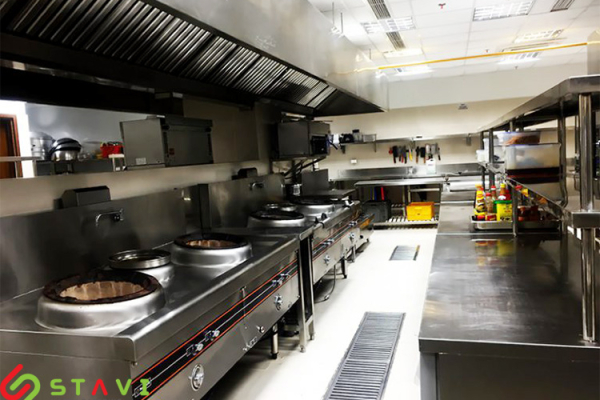
Food sample retention regulations are very important in industrial catering
You may also find these other useful articles helpful:
The One-Way Kitchen Process for Industrial Kitchens
Stavi - A Trusted Industrial Catering Provider in Phu Tho
Top 5+ Reasons to Choose Stavi's Industrial Catering Service in Binh Duong
How to Reduce Leftover Food, Loss and Waste in Industrial Catering
The importance of food sample retention
Food service is an essential service in society, yet it carries many potential risks, particularly that customers may suffer mass food poisoning or food allergies after eating. In the industrial catering industry in particular, each kitchen serves from several hundred to several thousand people, so any problem with the food affects a great many people. That is why food sample retention is so important: it allows the authorities to collect and test samples and examine the cause of the poisoning, and then conclude whether or not that product was the cause of harm to customers' health.
Food samples are taken at the serving point before the food is brought out to customers. For every dish prepared and served to customers, the kitchen staff member in charge is responsible for retaining food samples for 24 hours as required, so that they can be used for testing purposes if needed. If a customer of the kitchen is suspected of food poisoning or there is a specific request from the regulatory authority, the retained samples must not be destroyed but held until further notice from the relevant authorities.
This process ensures safety and hygiene for customers and requires the businesses involved to comply and take responsibility for managing and monitoring food quality.
.webp)
The food sample retention process of an industrial kitchen
The standard food sample retention process
Below are the 3 steps for retaining food samples in STAVI's industrial kitchens:
Step 1: Prepare the sampling tools
Sampling staff
- Staff must be fully equipped with the required protective work wear, including uniforms, masks, clean sanitized gloves, hair covers, etc.
- Staff must wash their hands, tie their hair back neatly and put on a hair cover before taking samples.
Sample retention containers
Decision No. 1246/QD-BYT of 2017 on "Guidelines for implementing the food sample retention regime for food service establishments" stipulates the following:
- Food sample containers must have tight-fitting lids
- Containers should be smooth, without patterns, and made of glass or stainless steel
- Sample containers must hold at least 100 grams for dry or solid food, or 150 ml for liquid food.
- Sampling and sample retention tools must be washed and sterilized before use.
- A separate set of sampling tools, including a separate spoon, ladle and tongs, is used for each retained sample
- Sampling tools must be properly disinfected before use
Forms
Have ready: labels for the retained food samples and the form for tracking the retention and disposal of retained food samples.
Step 2: Retain the food samples
Taking samples
- Restaurants and food businesses must retain samples of all dishes prepared and served during the day when serving 30 portions or more
- Take at least 100 g of solid food and 150 ml of liquid food
- Each dish must be sampled and stored in a dedicated container in accordance with the regulations
- Food samples must be taken before the food is served to customers.
Retaining samples
- The seal and the retained food sample label are affixed from the lid down to the body of the sample container; thin paper should be used. The seal must tear when the sample container is opened.
- Write the correct name of the food sample and attach a label with the basic information: name of the food sample, meal, time taken and person taking the sample
- Retained food samples must be stored separately from other food at the standard temperature. When supplementary food is used because food failed inspection or portions were increased (main dishes, side dishes, vegetables, dessert, etc.), samples of both must be retained
- Retain samples that correspond to the actual menu changes
- Food samples must be retained for at least 24 hours
- Record full details in the form for tracking the retention and disposal of retained food samples
Step 3: Dispose of the retained food samples
- After the food samples have been retained for 24 hours, if there is no suspicion of food poisoning and no specific request from the regulatory authority, the kitchen disposes of the corresponding retained samples
- Record full details in the sample tracking and disposal log
Step 4: Complete the record forms
Below are the 2 forms that industrial kitchens need to complete as part of the food sample retention process described above.
Form 1: Retained food sample label
Meal:……………………………………………… (breakfast/lunch/dinner)
Name of food sample:…………………………………………………..
Time taken: …. hours….minutes….day…..month…..year…………..
Person taking the sample (full name and signature):……………………………….
Form 02: Form for tracking the retention and disposal of retained food samples
Name of establishment:……………………………………………………….
Inspection location:……………………………………………….
.webp)
Form for tracking the retention and disposal of retained food samples
How should food samples be stored, and what is the minimum retention time?
Storing food samples in the kitchen requires care to ensure that the samples do not deteriorate or become contaminated with bacteria. Food samples are retained for 24 hours from the time of sampling. To store food samples, follow these steps:
Choose a suitable container: Choose a container that seals well and has good antibacterial properties to avoid bacterial contamination
Pack the food sample: Pack the food sample so that the food remains intact
Food samples are stored separately from other food, at a storage temperature of 2°C to 8°C.
Food samples must be retained for at least 24 hours from the time the sample was taken. If food poisoning is suspected or the regulatory authority so requests, the retained samples must not be destroyed until further notice.
Above are the food sample retention regulations in industrial catering as implemented in the kitchens of STAVI. We hope this detailed article will be useful as a reference for industrial kitchens to refine their working processes and ensure standards and quality.