 en
en Tiếng Việt
 日本語
日本語 简体中文
简体中文 한국어
한국어
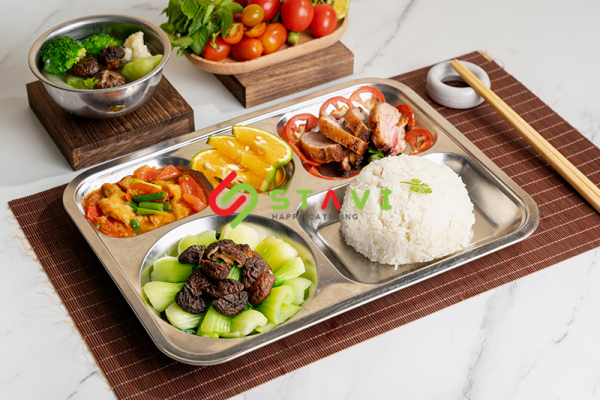
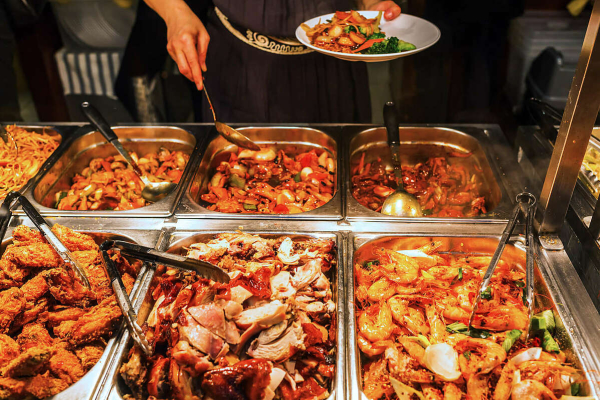
In the industrial catering industry, securing fresh, safe ingredients that meet food hygiene standards is a prerequisite for delivering quality meals to customers. At STAVI, the new supplier evaluation process is regarded as a crucial first step in the industrial meal supply chain; it is carried out systematically on a monthly basis to ensure consistent quality and optimised costs.

STAVI's new supplier evaluation process is carried out systematically every month
Related articles:
- Understanding food safety and hygiene regulations in schools
- Stavi - 10 years of dedication to delivering quality industrial catering
- The role of scientifically planned menus for factory workers
- Measures to ensure food safety and hygiene in industrial catering
I. Why do new suppliers need to be evaluated regularly?
Evaluating and selecting the right suppliers plays an extremely important role for every industrial kitchen. At STAVI, this process not only screens out reputable partners but also delivers a number of strategic benefits:
1. Ensuring ingredient quality and food safety
Incoming ingredients are the decisive factor in the quality of every meal. Thorough evaluation allows STAVI to select suppliers with the capacity to provide fresh ingredients of clear origin that fully comply with food safety and hygiene standards. This helps STAVI maintain its reputation and meet the ever-higher expectations of its customers.
2. Optimising costs and increasing competitiveness
By evaluating and comparing suppliers, STAVI can select the partners that deliver the greatest economic value, not only in terms of price but also in stability, delivery times and service quality. Optimising input costs allows STAVI to keep its prices competitive without compromising meal quality.
3. Diversifying supply sources and limiting risk
Not depending on a single supplier is how STAVI minimises the risk of supply chain disruption, an important lesson the industry learned in the wake of COVID-19. Maintaining a diverse, vetted supplier network allows the company to stay in control in every situation, from market fluctuations to operational incidents.
4. Building sustainable partnerships
A detailed, systematic evaluation process gives STAVI a solid foundation for long-term cooperation with its suppliers. When both parties clearly understand each other's standards, requirements and commitments from the outset, the relationship is built on transparency, trust and a shared drive for sustainable growth.

STAVI's supplier evaluation process is designed scientifically and systematically
II. The Supplier Evaluation Process at STAVI
STAVI's supplier evaluation process is designed to be scientific, systematic and highly practical, consisting of 7 detailed steps:
1. Step 1: Identifying needs and evaluation criteria
Before selecting a supplier, STAVI first clearly identifies its ingredient purchasing needs. Specifically, STAVI defines the following in detail:
- Type of ingredient required: Clearly defining the name, variety and product specifications (size, form, condition of the ingredient such as fresh/dried/frozen, etc.).
- Volume and supply frequency: Planning the quantity required per delivery and how often it is needed (weekly, monthly, quarterly).
- Special requirements, if any: For example, organic ingredients, no pesticide use, non-GMO, compliance with export standards, etc.
Once the needs have been clearly identified, STAVI proceeds to:
- Compile a list of potential suppliers: Based on experience, existing relationships, market information and reputable search channels, STAVI's purchasing department compiles a list of suppliers suited to the ingredient being sought.
- Build a specific evaluation scorecard: To ensure transparency and objectivity in the selection process, STAVI establishes a set of supplier evaluation criteria. The main criteria include: product quality, food safety certifications, supply capacity and delivery times, pricing and payment terms, stability and reputation, and so on.
This careful preparation is an important foundation that enables STAVI to make effective purchasing decisions and select long-term, sustainable supply partners.
2. Step 2: Sourcing & on-site supplier audits
Once the list of potential suppliers has been compiled, STAVI moves on to the next step: conducting on-site audits to assess each supplier's operational capacity and suitability.
2.1. Conducting on-site audits at the supplier's facilities:
A dedicated STAVI team, including representatives from the purchasing department, quality control (QA/QC) and, where necessary, the technical department, visits the supplier's production site or warehouse in person. The purpose of the audit is to check the actual conditions across the board, specifically:
- Infrastructure: Assessing the scale and condition of warehouses, workshops, production areas, and storage areas for raw materials and finished products.
- Hygiene and food safety: Observing the cleanliness of the workshop, production equipment and packaging area, as well as pest and microbial control systems, etc.
- Production, processing and storage processes: Reviewing the entire operating cycle from receipt of raw materials through processing, packaging and product storage, and checking quality management records where available.
- Personnel and operational organisation: Assessing the number, skill level and professionalism of the staff directly involved in production, and noting training procedures and compliance with labour and safety rules.
2.1. Objective evaluation and comparison against STAVI's standards:
On-site audits allow STAVI not only to verify the information suppliers provide on paper, but also to gain the most comprehensive and honest picture of their actual operational capacity.
Based on the observations and data collected, the evaluation team scores each criterion established in step 1, thereby determining each supplier's suitability and potential for long-term cooperation.

Objective supplier evaluation and comparison against STAVI's standards
3. Step 3: Testing incoming ingredients
After the on-site audit and preliminary supplier assessment, STAVI carries out the next important step: testing incoming ingredients to verify the actual quality of the products before entering into long-term cooperation.
3.1. Requesting ingredient samples:
STAVI contacts potential suppliers and asks them to send ingredient samples representative of their standard batches. Sampling follows a strict procedure to ensure objectivity: samples are sealed and fully documented with information on origin, sampling time, storage method and so on.
3.2. Conducting internal testing at STAVI:
The ingredient samples are sent to STAVI's specialist department for testing. There, the quality control (QA/QC) team evaluates them against the company's established internal quality standards.
The specific assessment covers: colour, smell, taste and texture; freshness and integrity; cleanliness and foreign matter; and food safety assessment relating to contaminants, microorganisms and so on.
Based on the test results, STAVI assesses how well the ingredients match the criteria set. Only suppliers whose samples meet the quality and safety requirements proceed to the next round of evaluation or to contract negotiations.
4. Step 4: Comparing prices and cost-effectiveness
After completing the quality assessment of the ingredient samples, STAVI enters the cost analysis and comparison phase to select the supplier that is optimal in terms of economics and long-term effectiveness.
- Compiling and comparing quotations: STAVI collects official quotations from potential suppliers and compares them with the unit prices currently applied by existing partners. Every price is analysed in its specific context, such as order quantity, supply frequency and accompanying conditions (transport and storage costs, discounts, payment terms, etc.).
- Comprehensive cost-effectiveness analysis: The comparison goes beyond the unit price (price per kg, per tonne, etc.); STAVI also evaluates overall effectiveness, including actual use value, assessment of potential risks (late deliveries, defective goods, etc.), usage efficiency and stability.
- Deciding on the principle of "value, quality and stability": Finally, STAVI selects its partners based on a balance between reasonable pricing, ingredient quality that meets requirements and stable supply capacity. This evaluation aims to optimise return on investment while maintaining consistent output quality across the entire production and business chain.

STAVI verifies the actual quality of products before entering into long-term cooperation
5. Step 5: Overall evaluation and selection
After completing the audits, data collection and practical testing with potential suppliers, we carry out an overall evaluation to identify the most suitable partners to continue working with in the next phase. The evaluation follows a clear, specific set of criteria weighted according to the company's actual needs. Specifically:
5.1. Ingredient quality
We consider how well the supplier meets the technical requirements and quality standards set by the company, including:
- Uniformity and consistency of ingredients across test batches
- Compliance with industry standards (ISO, HACCP, etc.)
- Rate of defects, damage and substandard quality during testing
5.2. Reasonable pricing
Pricing is analysed not only on the basis of the quoted price, but also taking into account:
- Competitiveness compared with the general market
- Stability and transparency of pricing policy
- Accompanying payment terms (discounts, volume incentives, etc.)
5.3. Delivery time
This criterion assesses the ability to meet schedules and reliability in transport, including:
- Delivery speed during test batches
- Flexibility when schedules or volumes change
- Ability to fulfil urgent orders in emergencies
5.4. Supplier cooperation and support
We assess the supplier's working attitude and ability to coordinate through:
- Proactiveness in communication and information sharing
- Attitude towards technical support and handling of incidents or complaints
- Openness in negotiation and in resolving issues that arise
5.5. Consolidated results and selection
All of the above criteria are scored according to a pre-agreed internal scale. Suppliers that achieve a high total score and demonstrate comprehensive alignment with the company's development direction are selected to move on to the actual supply trial phase, which involves small orders to test their delivery capacity under day-to-day operating conditions.

The criteria are scored on an internal scale prepared in advance by STAVI
6. Step 6: Actual supply trial
After completing the evaluation and selecting potential suppliers, we proceed to the actual supply trial phase. This is an important step to verify all of the supplier's commitments under real operating conditions, while assessing their ability to maintain service quality over long-term cooperation. Specifically, this process includes:
6.1. Placing trial orders
- Each selected supplier receives trial orders over a period of 1 to 2 weeks.
- Order quantities are kept at a level sufficient to monitor the new supplier's capacity, which then guides subsequent ordering.
- Delivery, payment and storage conditions follow the standards applied to official suppliers, to ensure a fair evaluation that reflects real practice.
6.2. Monitoring and evaluation by each department
Throughout the trial period, the relevant departments are directly involved in monitoring and evaluating every aspect of the supply process, as follows:
- Kitchen team: Monitors how well the ingredients perform during preparation (taste, freshness, shelf life, wastage, etc.) and gives direct feedback on the overall quality of the finished dishes.
- Purchasing department: Records the accuracy of order fulfilment (correct quantity, correct type, on time), handles any issues arising during delivery, and assesses how cooperative the supplier is when changes occur.
- QA/QC department (Quality Assurance and Quality Control): Checks quality indicators before, during and after delivery: storage temperature, freshness, product appearance, packaging specifications, shelf life, consistency between batches, etc.
6.3. Consolidation and feedback
- At the end of each trial week, the relevant departments hold an internal meeting to consolidate data, record any issues, assess satisfaction levels and identify the strengths and weaknesses of each supplier.
- Suppliers receive specific feedback from the company so they know where they are performing well and what needs to improve.
- Suppliers that maintain stable performance, meet quality requirements and cooperate effectively are considered for the contract signing phase and inclusion in the official partner list.
.webp "STAVI selects suppliers that guarantee food hygiene and quality")
STAVI selects suppliers that guarantee food hygiene and quality
Step 7: Post-trial evaluation & cooperation decision
After the trial period, STAVI holds a meeting between the relevant departments, Kitchen, Purchasing and QA/QC, to evaluate the results of the trial.
Based on input from each department, the evaluation team consolidates and comprehensively analyses:
- Does the supplier fully meet the criteria set?
- Has ingredient quality remained consistent across multiple deliveries?
- Has feedback from the departments using the ingredients been positive and consistent?
- Did any risks or problems arise during the trial?
If the supplier fully meets the criteria and receives positive feedback, it is approved for inclusion in STAVI's official supplier list. This allows internal units to place regular orders and build a long-term partnership, while creating a foundation for both parties to work together on better products and processes in the future. All information relating to the trial and the evaluation results is kept on file to support periodic supplier performance monitoring and to serve as a reference in the event of an incident or a future re-evaluation.
The supplier evaluation process is the foundation of meal quality at STAVI. We not only ensure safety and full nutrition at every stage of preparation, but also commit to transparency throughout the entire supply chain.
STAVI: where customers can always rest assured that every meal is safe, high-quality and full of nutritional value. STAVI industrial catering understands that every meal you eat is a trust you place in us, which is why we always put quality and transparency first. Supplier evaluation is not a formality; it is a promise of responsibility and standards that we are committed to upholding every day.
STAVI industrial catering specialises in providing meals for FACTORIES - OFFICES - SCHOOLS throughout northern Vietnam, and is proud to have more than 10 years of experience in the field. STAVI currently serves many partners from countries such as Japan, the United States, South Korea, China and Taiwan. If you need industrial catering for your organisation, call our hotline 0917325858 now for detailed advice about our services!