 en
en Tiếng Việt
 日本語
日本語 简体中文
简体中文 한국어
한국어
What is the three-step food inspection process in industrial catering, and is it important? In the article below, STAVI industrial catering shares the details of the three-step food inspection process in accordance with Ministry of Health guidelines.
Pursuant to the regulations on food safety conditions for food production and trading establishments in Government Decree No. 67/2016/ND-CP dated July 1, 2016 on conditions for food production and trading under the specialized management of the Ministry of Health, and Government Decree No. 155/2018/ND-CP dated November 12, 2018 amending and supplementing a number of regulations on business investment conditions under the state management of the Ministry of Health, food businesses must carry out three-step food inspection in accordance with Ministry of Health guidelines.
Three-step food inspection is stipulated in the Guidelines for implementing the three-step food inspection and food sample retention regime for food service establishments, issued together with Decision No. 1246/QD-BYT dated March 31, 2017 of the Minister of Health.
What is three-step food inspection?
Three-step food inspection is the inspection, recording and retention of records at the kitchen in order to control food safety throughout the entire process, from receiving ingredients and food, through preparation, processing, portioning, storage and transport of food, until it is eaten at the kitchen.
.webp)
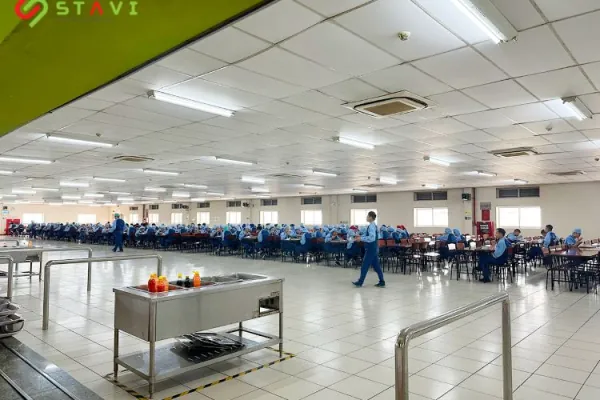
The three-step food inspection process at a STAVI industrial kitchen
Food Sample Retention Regulations in Industrial Catering
The One-Way Kitchen Process for Industrial Kitchens
Criteria for Choosing a Standard-Compliant Office Catering Provider
Three-step food inspection guidelines
Step 1: Inspection before food preparation
1. Inspect food ingredients before they are brought into the food service establishment:
a) Check the type and accompanying documents for each product brought into the kitchen (certificates of origin, purchase contracts, invoices and other relevant documents). Specifically:
- For fresh and frozen food: name of the food, weight, animal quarantine certificate; information on the product label (product name, manufacturer, manufacturing address, date of manufacture, expiry date, packaging specifications, weight, storage requirements), etc.
- For pre-packaged food and food additives: product name, weight, check the product label (product name, manufacturer, manufacturing address, batch number, date of manufacture, shelf life, packaging specifications, weight, instructions for use, storage requirements). Where necessary, check the documents relating to the product (Certificate of food safety eligibility, Certificate of receipt of conformity declaration or Certificate of confirmation of declaration of conformity with food safety regulations for the product, etc.).
b) Inspect and assess the sensory condition of each type of incoming food for quality and food safety, including color, smell, taste and integrity of the product, as well as the actual storage conditions (if required).
c) Rapid testing of certain quality and food safety indicators for some food ingredients is encouraged.
Where ingredients or food are inspected and assessed as failing to meet quality and food safety requirements, the measures taken with the product must be clearly recorded, such as rejection, return or destruction.

Three-step food inspection form for industrial catering businesses
2. Food brought in for preparation at the establishment's kitchen:
a) For food brought in for immediate preparation: follow the provisions on "Inspecting food ingredients before they are brought into the food service establishment" above.
b) For food taken from the establishment's storeroom: follow the provisions on "Inspecting and assessing the sensory condition of each type of incoming food for quality and food safety, including color, smell, taste and integrity of the product, as well as the actual storage conditions".
3. The information from the inspection before preparation (Step 1) is recorded in Form No. 1, Appendix 1: Three-step food inspection record forms.
Step 2: Inspection during food preparation
1. Inspect hygiene conditions at the establishment from the start of preparation and processing until the food is fully prepared:
a) Persons involved in preparation: clothing, hats, gloves, jewelry, etc.
b) Preparation equipment and utensils: use of preparation utensils and containers for raw and cooked food, storage places for cooked and raw food, etc.
c) Hygiene of the preparation and auxiliary areas: floors, drainage, waste bins, etc.
2. Sensory assessment of dishes after preparation: during preparation and processing, if ingredients or food show any abnormal signs (color, smell, taste, etc.), they must be inspected, assessed and discarded, and the measures taken must be clearly recorded.
3. Record the start and end date and time of preparation for each dish.
4. The information from the inspection during food preparation (Step 2) is recorded in Form No. 2, Appendix 1: Three-step food inspection record forms.
Step 3: Inspection before serving
1. Inspect food portioning and the food display area
2. Check the dishes against the meal menu.
3. Check the cleanliness of bowls, plates and eating utensils.
4. Check the covers, equipment and means of preserving food (for food not eaten immediately or transported elsewhere).
5. Carry out a sensory assessment of the dishes; if a dish shows abnormal signs or an unusual smell or taste, take prompt action and record it in detail.
6. The information from the inspection before serving (Step 3) is recorded in Form No. 3, Appendix 1: Three-step food inspection record forms.
Above is the 3-step food inspection process for industrial kitchens shared with you by STAVI industrial catering. If you would like further advice on industrial kitchen management processes or are looking for a trusted industrial catering provider, please call the company hotline or visit our representative office in person for a consultation.