 en
en Tiếng Việt
 日本語
日本語 简体中文
简体中文 한국어
한국어
Industrial kitchens place great emphasis on food storage, because its quality affects the meals of thousands of people. Good storage prevents food poisoning and the waste caused by spoilage, while also improving business performance. Not every kitchen, however, has a firm grasp of the process or follows the principles of storage.
In the article below, STAVI industrial catering shares how to store food properly in an industrial kitchen, so that operations at the kitchen follow the rules.

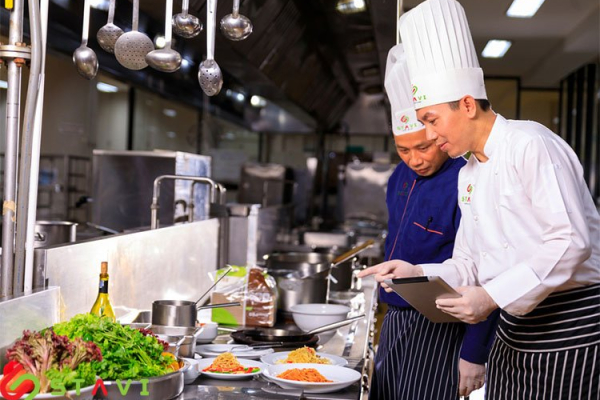
Staff at the STAVI kitchen are trained in how to store food properly
See also:
- STAVI: how to tell fresh, good-quality pork for the kitchen
- Comprehensive industrial catering solutions from Stavi
- A sound nutritional regime for lower secondary school pupils
Why food storage matters in an industrial kitchen
An industrial kitchen typically serves anywhere from a few hundred to a few thousand meals per shift, which makes storing food according to a standard process particularly important. This is therefore always a matter of the highest concern, in order to guarantee the quality of the meals and the health of the people eating them.
When food is stored properly, bacteria and mould are kept from growing, which minimises the risk of food poisoning and ensures that hygiene standards are met. Good storage also keeps ingredients fresh and preserves their full flavour and nutritional value throughout preparation. At the same time, methodical sorting and storage reduces losses, saves on the cost of buying food and helps the kitchen run smoothly and on time.
It is also a mandatory requirement for meeting food safety and hygiene standards, HACCP and legal regulations, and through this it builds a professional and reputable image for the industrial kitchen.
How to store food safely in an industrial kitchen
Keeping food fresh requires the right storage: raw food needs to be kept in the chiller or the freezer, while cooked food needs a hot holding counter and must be used within the permitted time.
Storing raw food in industrial freezers and chillers
Cold storage is one of the most effective methods for keeping raw food such as meat, fish, seafood, vegetables and fruit. Controlling the temperature of the freezer and the chiller is the key factor in preserving quality and preventing bacteria from growing.
Food to be used the same day or within one or two days is kept in the chiller at a temperature of 0°C to 5°C, which maintains freshness without altering the structure of the food. For food that needs to be stored for longer, the kitchen must use a deep freezer at –18°C or below. This temperature completely slows the activity of micro-organisms, limits spoilage and extends shelf life. At the same time, food must be sealed in packaging, labelled with the date it entered the store and arranged on the FIFO principle so that it is safe and easy to manage.
Keeping cooked food in a hot holding counter or a heated cabinet
In an industrial kitchen, dishes that have been cooked must be kept above 60 degrees Celsius in a hot holding counter or a heated cabinet in order to preserve their flavour when served; this is the safe temperature at which harmful bacteria are prevented from growing.
A hot holding counter keeps dishes warm so that they do not dry out or change in taste before they reach the workers or the pupils. Covering the food with stainless steel lids, using trays that meet the standard and cleaning the hot holding counter periodically are also very important in making sure the food stays clean, safe and appetising. Today, designs vary according to the scale of the kitchen and where the counter is placed, so that serving is as convenient and quick as possible.

Cooked food is held in a hot holding counter
Points to note when storing food in an industrial kitchen
Every stage, from sorting to storage, must be strictly observed if the kitchen is to run safely and efficiently. Below are the important points to apply when storing food in an industrial kitchen:
Sort food before storing it
This is the first and mandatory step before food goes into the store or the refrigerator, so that it is kept at the right temperature. Raw food such as meat, fish and seafood is separated from vegetables, because each type needs to be stored differently.
Foods such as meat, fish and seafood need to be patted dry and washed clean, then divided into clean bags before going into the cabinet. Do not put too much food into one bag, as it will not chill quickly or evenly, which easily leads to spoilage.
Vegetables also need to be sorted by type, with damaged or wilted leaves picked out, before being divided into small bags and placed in the chiller at a suitable temperature. Note that safe materials should be used as containers.
Each type of food needs to be kept in a dedicated container with a tightly fitting lid and a label clearly stating the date it came in and its expiry date. This not only helps control quality but also supports the rotation of food in the kitchen.
Control the temperature of the refrigerator and the freezer
Temperature is the key factor determining how long food can be stored and at what quality. The chiller must always be kept between 0 and 5°C for storing vegetables, eggs, milk and food that has already been prepared.
The freezer, meanwhile, needs to be kept at -18°C or below in order to store raw meat and fish and to inhibit the growth of micro-organisms. Kitchen staff must check the temperature of the cabinets at least twice a day to make sure the refrigeration system is working steadily and that there is no unusual loss of cold that would affect the quality of the food.
Stack food tidily and within capacity
Each cabinet has a set capacity and load, so it must not be overfilled with food, as the cold air will not circulate evenly and some areas will not reach the required temperature. Food is then liable to spoil, to decline in quality or to freeze unevenly.
Food therefore needs to be stacked tidily, with sensible gaps so that the cold air spreads throughout the cabinet. The cabinet must be cleared out periodically to avoid stock sitting there for a long time, and the rules on the maximum time food may be kept must be followed closely. Where food has been kept beyond that time, advice should be sought so that it can be dealt with effectively; it should not be used to make dishes, as that could easily affect the health of a great many people.
The first in, first out principle
One of the important principles in managing food in an industrial kitchen is that goods that came in first must go out first, in order to limit stock on hand and avoid anything passing its date. Every container, tray and package needs a label showing the date it came in, so that staff can easily recognise the order in which items should leave the store. Applying FIFO properly keeps the kitchen’s ingredients fresh and minimises waste.
When goods come in, place the new ingredients underneath and the older ingredients on top, so that they are easy to take out and use. When taking goods out, put the food back in its proper place so that nothing is forgotten.
Keep raw and cooked food well apart
Cooked and raw food must not be kept close together, as this can lead to cross-contamination. The kitchen must therefore set aside separate trays, containers, knives and chopping boards for each group of food: meat, fish, vegetables and cooked food.
At the same time, the preliminary processing area must also be kept separate in order to stop bacteria spreading from raw food to ready-to-eat food. Do not store for more than 24–48 hours, so that the full flavour is preserved and the risk of spoilage avoided.

Food is sorted into different areas to avoid cross-contamination
Clean the store and the refrigerator periodically
The store and the refrigerator come into direct contact with food every day, so they need to be cleaned regularly to prevent bacteria from growing. Door handles, cabinet seals, trays and shelves must be wiped clean daily. Refrigerators and freezers also need to be defrosted and thoroughly cleaned every week, or as soon as a thick layer of frost appears. Regular checks help spot food that has passed its date or has an unusual smell so that it can be removed in good time.
Keep full records and controls
Everything relating to goods coming in, going out and held in stock must be recorded clearly in order to guarantee transparency and make tracing easy. The cabinet temperature log must be filled in consistently every day. The inspection reports on the quality of incoming food also need to be kept on file for comparison should an incident occur. Keeping full records helps the kitchen maintain a professional process and control risk effectively.
With the information STAVI has shared above, we hope you now have a grasp of how to store food safely and effectively in an industrial kitchen so as to serve your partner’s kitchen as well as possible. If you need advice on catering for factories, offices or schools, contact STAVI now for support with your questions and advice on the right meals at the best price for your business!