 en
en Tiếng Việt
 日本語
日本語 简体中文
简体中文 한국어
한국어
No matter how good a home cook you are, there will be times when a heavy hand with the seasoning leaves food too salty. Join STAVI Industrial Catering and learn tips for fixing over-salted dishes in this article!
Tips for fixing over-salted dishes with STAVI
1. The first method is to add water to neutralise the saltiness
This is the simplest method you can use to fix over-salted porridge or dishes with plenty of liquid, such as soups, broths and braised dishes… If a dish is too salty because the liquid has boiled down or because of an over-generous hand with the seasoning, add a little water to neutralise the saltiness. When adding water, adjust the amount appropriately so as not to reduce the dish's flavour.
However, remember to re-season with other condiments such as MSG, seasoning powder and pepper so the dish stays full-flavoured.

Image: Using water to fix over-salted dishes with STAVI
2. The second method is to use vinegar or lemon
Lemon and vinegar are familiar ingredients in the family kitchen that can be used to make dipping sauces or to clean food. Besides adding flavour to dishes, lemon and vinegar can also be used to fix over-salted dishes.
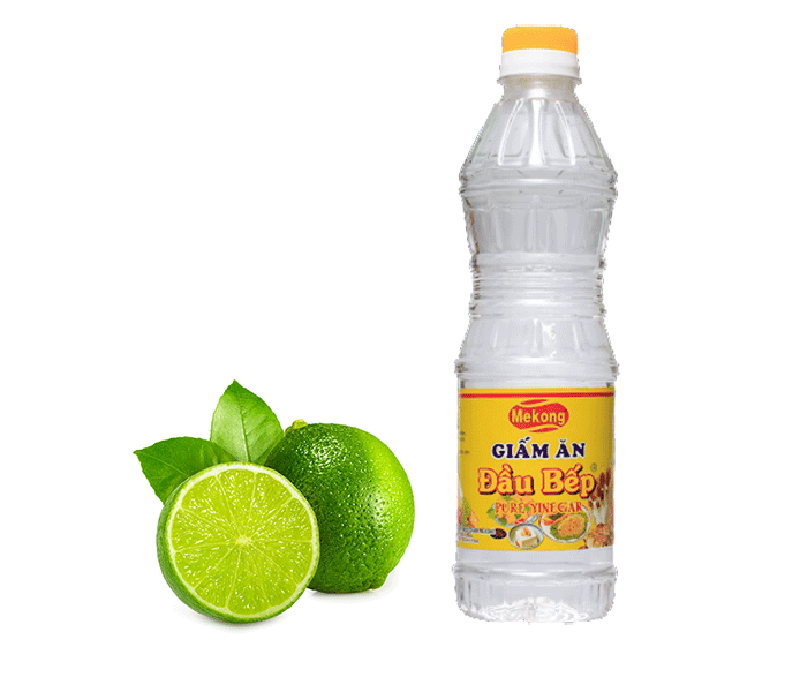
Image: Using vinegar or lemon to fix over-salted dishes with STAVI
If a braised dish, soup or broth-based dish is too salty, add 1 - 2 teaspoons of lemon juice to reduce the saltiness without affecting the dish's original flavour. However, because lemon is acidic and sour, you should not add lemon juice to dishes containing milk, as it will cause curdling.
As vinegar is quite sharply sour, you should add it gradually, a little at a time, to fix the saltiness, and taste again once the saltiness has eased. Avoid adding too much vinegar at once, as it will change the dish's taste, make it more sour and make it hard to re-season.
3. The third method is to use unsweetened yoghurt
If you cannot use lemon or vinegar to "rescue" over-salted dishes that contain milk, cheese, fresh cream, rich curry and so on, do not worry: use unsweetened yoghurt to adjust the saltiness. Simply add a suitable amount of unsweetened yoghurt and the saltiness will be reduced considerably. But remember to use the unsweetened kind!
4. The fourth method is to use raw potato
Potatoes are also a very effective way to rescue an over-salted dish. Simply cut a few slices of potato, add them to the over-salted dish and cook together for about 10 minutes before serving. The potato will absorb some of the saltiness; then just take it out and enjoy your dish.
5. The fifth method is to use tomatoes
Instead of potatoes, you can also fix an over-salted dish by adding tomatoes to the salty pot and leaving them in for 15 – 20 minutes; the natural sourness of the tomatoes will help neutralise the saltiness of the dish.
.webp "Fixing over-salted dishes with tomatoes, STAVI style")
Image: Fixing over-salted dishes with tomatoes, STAVI style
However, because the sourness of tomatoes is fairly mild, it cannot fix dishes that are very salty, so only use tomatoes for pots of food with just a little too much salt!
6. The sixth method is to use honey to soften the saltiness
Besides a whole range of health benefits such as reducing inflammation, improving the skin and preventing ageing... honey also has a use in a number of kitchen tricks that not everyone knows about, including fixing over-salted dishes. For an over-seasoned dish, add 1 teaspoon of honey and stir it evenly into the food; the sweetness of the honey both reduces the saltiness and enhances the dish's flavour.
Honey both reduces the saltiness of a dish and can enhance the flavour of soups, braised dishes and broths thanks to its natural, fragrant sweetness; a small spoonful of honey will help us solve these tricky cases, making the dish less salty and more delicious. Sugar can be used as a substitute, but honey is far more effective.
7. The seventh method is to use egg white to "absorb" the saltiness
Fixing saltiness with egg white may sound a little costly and troublesome, but the result is surprisingly effective. If a dish is too salty and your refrigerator does not have any of the ingredients above, you can consider this method. So, when a soup or broth turns out too salty, crack 1 – 2 eggs, more or fewer depending on how salty it is.

Image: Fixing over-salted dishes with egg white, STAVI style
Separate the yolks from the whites, but remember to leave the whites whole without beating them. Then add the egg whites as they are to the pot, let it boil for about 5 minutes, then remove the egg whites; the saltiness of the dish will be reduced quite well.
8. STAVI's advice in the kitchen for better dishes
Learning to cook is very important, and cooking becomes much easier if you master a few simple tips that most chefs still use.
-
Use tongs to cook everything.
-
Store everything in plastic containers with lids.
-
Do not peel garlic with a knife.
-
Use a separate cutting board for garlic and onions.
-
For green herbs, use plenty of fresh ones.
-
Do not stock up on too many spices if you rarely use them.
-
Overcooking is a chef's biggest mistake.
-
If it does not taste quite right, the dish most likely needs a little sugar, salt, vinegar or olive oil.
-
Do not buy many large onions; use small ones.
-
Fruit should not be stored in the refrigerator for too long.
What are you waiting for? Save these useful tips for delicious meals with STAVI Industrial Catering. We wish you success!